Saskatoon Real Estate – WordPress
- 306-222-3238
- RealEstateRyanW@gmail.com
- Saskatoon, SK

Commercial Real Estate Market in Saskatoon in 2026
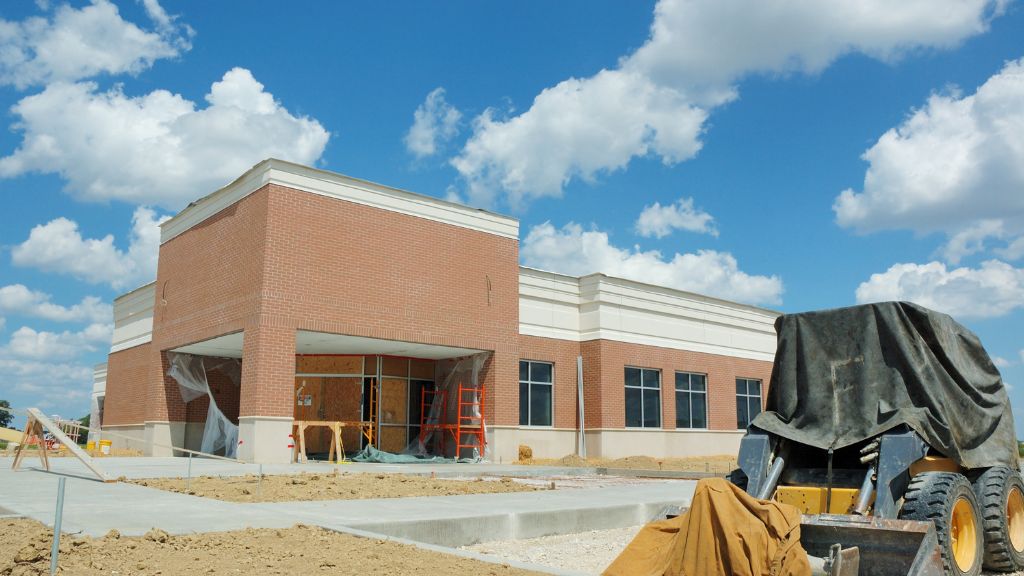
The commercial real estate market in Saskatoon is heading into 2026 with a very different profile compared to many larger Canadian cities. While national headlines often focus on uncertainty, volatility, and declining activity, Saskatoon’s commercial market remains comparatively stable, affordable, and locally driven.
Understanding market trends is much easier when working with a Saskatoon commercial real estate expert who follows local investment activity, property demand, and pricing patterns across the city’s commercial sectors.
As a result, business owners, investors, and developers are increasingly paying attention to Saskatoon as a market where long-term fundamentals still matter. In addition, factors such as interest rates, financing conditions, and sector-specific demand are shaping how commercial real estate in Saskatoon is performing as we move through 2026.
This outlook explores the current state of the Saskatoon commercial real estate market, key economic drivers, pricing trends, demand by property type, and what buyers can realistically expect in the year ahead.
- Overview of the Saskatoon Commercial Real Estate Market
- Key Economic Drivers Supporting Commercial Real Estate in Saskatoon
- How Interest Rates Are Affecting Commercial Property in 2026
- Commercial Property Pricing Trends in Saskatoon
- Demand by Commercial Property Type
- Investor vs Owner-Occupied Commercial Buyers
- Risks Commercial Buyers Should Consider in 2026
- Opportunities in the Saskatoon Commercial Real Estate Market
- Outlook for the Saskatoon Commercial Real Estate Market Beyond 2026
- Final Verdict on the Commercial Real Estate Market in Saskatoon
- Frequently Asked Questions About Commercial Real Estate in Saskatoon
Overview of the Saskatoon Commercial Real Estate Market
Overall, the Saskatoon commercial real estate market is best described as measured rather than speculative. Unlike larger metropolitan centres, Saskatoon has avoided dramatic price swings, which continues to attract owner-occupiers and long-term investors.
Because entry prices remain relatively accessible, buyers are typically focused on usability, cash flow, and long-term stability rather than short-term appreciation. As a result, the market tends to move steadily instead of reacting sharply to external pressures.
Commercial Market Comparison: Saskatoon vs Larger Canadian Cities
| Market Factor | Saskatoon | Larger Canadian Cities |
|---|---|---|
| Entry pricing | More affordable | Significantly higher |
| Speculative activity | Low | Moderate to high |
| Buyer profile | Owner-occupiers and long-term investors | Institutional and short-term investors |
| Market volatility | Low to moderate | Moderate to high |
This stability mirrors trends already seen in the Saskatoon real estate market in 2026, where affordability and steady demand have supported consistent performance across both residential and commercial sectors.
Key Economic Drivers Influencing Commercial Real Estate in Saskatoon
Several local factors continue to shape the Saskatoon commercial property market.
Local business growth and employment
Small and medium-sized businesses remain the backbone of Saskatoon’s economy. As these businesses expand, demand for office, retail, and industrial space naturally follows. Consequently, local employment stability plays a major role in sustaining commercial real estate demand.
Population growth and urban development
Ongoing population growth supports increased demand for service-based commercial properties. As new neighbourhoods develop, retail centres, professional offices, and mixed-use spaces often follow, reinforcing long-term commercial value.
Infrastructure and regional investment
Infrastructure projects and regional investment help sustain confidence among commercial buyers. Because of this, Saskatoon continues to attract buyers who prioritise stability over speculative growth.
How Interest Rates Are Affecting Commercial Property in 2026
Interest rates have a stronger impact on commercial real estate than residential markets, particularly when financing terms are more complex.
When interest rates rise, borrowing costs increase, which often reduces speculative buying. However, this also tends to reduce competition, creating opportunities for prepared buyers. Similar to patterns seen in how interest rate changes affect Saskatoon home prices, higher rates in Saskatoon have slowed activity rather than caused sharp declines.
Interest Rates and Commercial Market Impact
| Interest Rate Environment | Impact on Buyers | Market Effect |
|---|---|---|
| Rising rates | Higher financing costs | Reduced speculative demand |
| Stable rates | Predictable borrowing | Balanced market activity |
| Higher rates with low competition | Better negotiation leverage | Opportunities for prepared buyers |
As a result, many buyers are focusing more on fundamentals and long-term performance instead of short-term rate movements.
Commercial Property Pricing Trends in Saskatoon
Commercial property pricing in Saskatoon has remained relatively stable compared to national averages. Rather than dramatic corrections, the market tends to experience gradual adjustments over time.
Stability over volatility
Because the Saskatoon commercial real estate market is driven largely by local demand, pricing is less sensitive to national fluctuations. This behaviour reflects the same affordability dynamics discussed in average house price trends in Saskatoon, where steady performance has historically outpaced volatility.
For many buyers, predictable pricing is more attractive than rapid appreciation followed by correction.
Demand by Commercial Property Type
Demand within the Saskatoon commercial real estate market varies by sector.
Commercial Property Demand by Type
| Property Type | Current Demand | 2026 Outlook |
|---|---|---|
| Office | Selective | Stable, location-dependent |
| Retail | Moderate | Strong in neighbourhood centres |
| Industrial | High | Continued demand growth |
Office space
Office demand remains selective, with businesses prioritising functionality, accessibility, and flexible layouts.
Retail space
Retail demand is strongest in neighbourhood-focused locations, particularly where residential growth supports ongoing foot traffic.
Industrial and warehouse space
Industrial properties continue to perform well, driven by logistics, trades, and service-based businesses. This sector remains one of the strongest areas of commercial real estate in Saskatoon heading into 2026.
Investor vs Owner-Occupied Commercial Buyers
One defining feature of the Saskatoon commercial real estate market is the high proportion of owner-occupied buyers.
Owner-occupied buyers
Many local businesses prefer ownership over leasing, especially when long-term costs are comparable. This mindset closely reflects the decision-making process explored in buying vs renting in Saskatoon, where ownership often provides greater long-term stability.
Commercial investors
Investors in Saskatoon tend to prioritise:
Stable cash flow
Long-term tenant retention
Conservative appreciation
As a result, speculative investment remains limited compared to larger markets.
For investors considering long-term opportunities, investing in commercial real estate in Saskatoon can provide strong potential through income-producing properties such as office buildings, retail units, and industrial spaces.
Risks Commercial Buyers Should Consider in 2026
While the market remains stable, commercial buyers should still be aware of potential risks.
Financing constraints
Commercial lending standards remain tighter than residential lending. Therefore, preparation and strong financial positioning are essential.
Tenant concentration risk
Properties dependent on a single tenant may face higher risk if vacancy occurs. Diversification is often key.
Economic sensitivity
Certain commercial sectors are more sensitive to economic shifts, reinforcing the importance of careful property selection.
Opportunities in the Saskatoon Commercial Real Estate Market
Despite broader economic uncertainty, several opportunities stand out in 2026:
Reduced competition due to higher interest rates
Increased negotiation leverage
Long-term value in well-located properties
Businesses and investors exploring commercial real estate in Saskatoon should work with specialists who understand zoning, pricing, and long-term market dynamics.
Outlook for the Saskatoon Commercial Real Estate Market Beyond 2026
Looking ahead, the Saskatoon commercial real estate market is expected to remain:
Locally driven
Stable rather than speculative
Attractive for long-term ownership
Growth is likely to continue at a measured pace, favouring buyers who prioritise sustainability, usability, and cash flow.
Final Verdict on the Commercial Real Estate Market in Saskatoon
The commercial real estate market in Saskatoon offers a balanced outlook heading into 2026. While higher interest rates have moderated activity, they have also created opportunities for prepared buyers.
For business owners and investors focused on long-term stability, Saskatoon remains one of the more accessible and resilient commercial real estate markets in Canada.
Each of the city’s office retail and industrial real estate sectors responds differently to economic conditions, which is why understanding how these markets perform individually is important when evaluating commercial property opportunities.
Frequently Asked Questions About Commercial Real Estate in Saskatoon (2026)
Is 2026 a good time to buy commercial real estate in Saskatoon?
It can be. In 2026, higher interest rates may reduce competition, which can improve negotiating power. However, the best timing depends on financing terms, property type, and your long-term business goals.
Which commercial property types are strongest in Saskatoon right now?
Industrial space is often the strongest segment, while retail demand is steady in service-based locations. Meanwhile, office space tends to be more selective and location-dependent.
Do higher interest rates affect commercial property prices in Saskatoon?
Yes. Higher rates usually increase borrowing costs, which can slow demand and price growth. However, in Saskatoon this often results in steadier pricing and more negotiation rather than sharp declines.
Is it better to buy or lease a commercial property in Saskatoon?
It depends. Buying can provide long-term cost control and stability, while leasing can offer flexibility and lower upfront costs. Your decision should align with your cash flow, growth plans, and how long you expect to stay in the space.
What are the biggest risks when buying commercial property in Saskatoon?
Common risks include tighter financing, tenant concentration in single-tenant properties, and sector-specific sensitivity to economic changes. Because of this, due diligence on location, zoning, and lease terms is critical.
Ready to Buy or Sell in Saskatoon?
I’m here to help with data-backed guidance and proven Saskatoon market expertise.
Ryan Williams:
Tel: (306) 222-3238
Author Bio
This article is written by Gurdeep Lall, Founder & CEO of Mango Madness Digital Agency. With years of experience helping Saskatoon businesses grow online, Gurdeep specializes in SEO, web design, and local lead generation. Learn more about Mango Madness Digital Agency.